The Root of It All: Digestion

Digestion truly is the root of it all. Every cell in your body relies on the nutrients broken down and absorbed through your digestive system. When this system is functioning optimally, energy improves, skin clears, hormones stabilize, and mood feels lighter. But when things are off, bloating, fatigue, irritability, or breakouts often show up as your body’s way of asking for support.
This month, we’re exploring digestion in its most natural, foundational form, from how it starts in your brain to how it nourishes every system in your body.
Did You Know?
Just smelling or thinking about food triggers nearly 20 percent of your stomach’s digestive secretions before you even take the first bite.
The North to South Story
Digestion doesn’t begin in the stomach. It starts in your brain. The moment you see, smell, or even think about food, your body begins producing saliva, enzymes, and stomach acid. This cephalic phase signals your body that it’s time to digest.
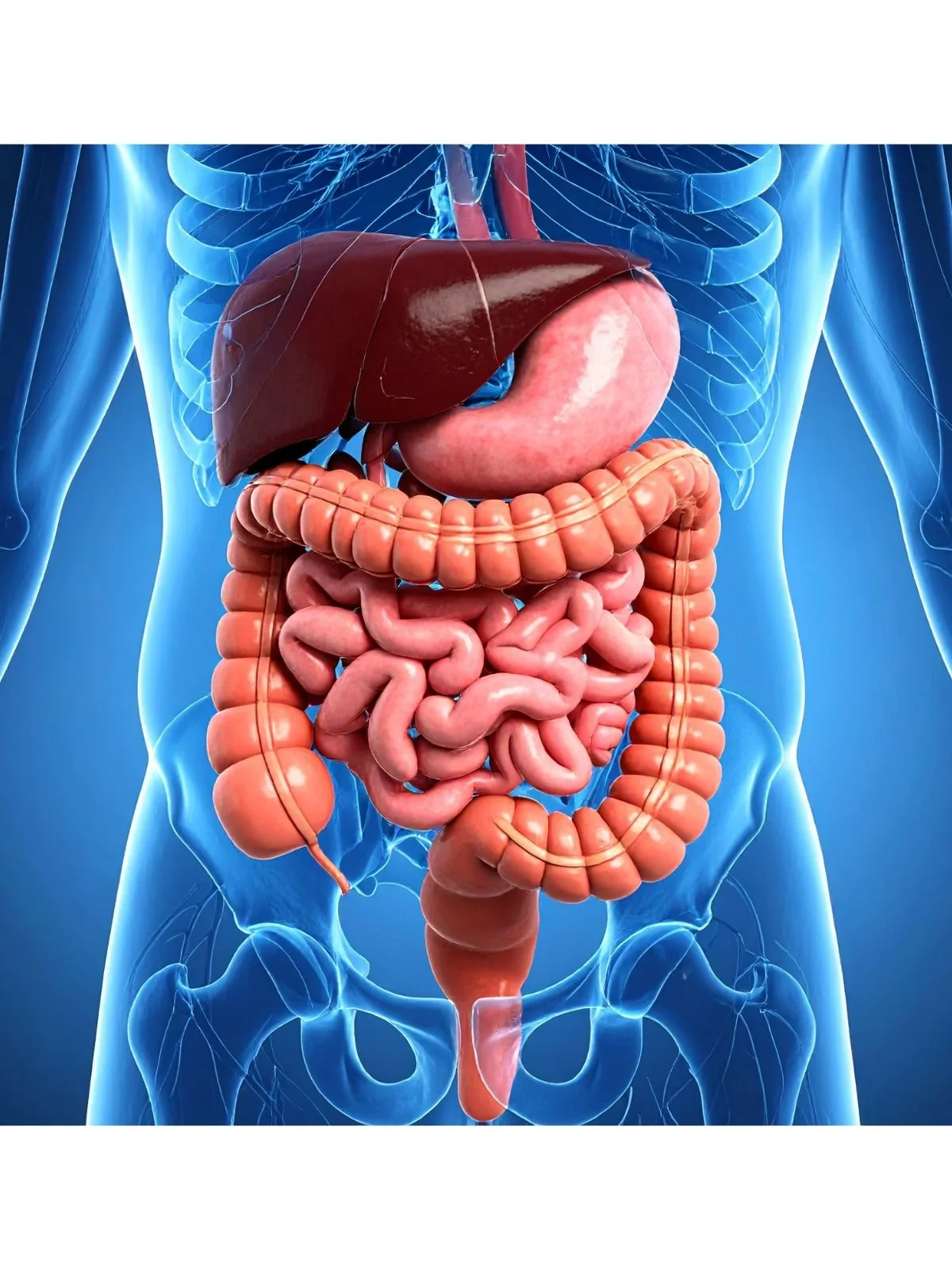
From there, food moves down the esophagus into the stomach, where stomach acid and enzymes begin breaking down proteins and killing off unwanted bacteria. As food becomes chyme, it moves into the small intestine, where bile and pancreatic enzymes work to break down fats and carbohydrates. Nutrients are absorbed here and carried to the liver to be processed and distributed throughout the body.
Finally, the large intestine absorbs water, creates short chain fatty acids from fiber, and houses the gut microbiome. This internal ecosystem influences everything from immune health to mood regulation.
When Digestion Feels Off
Because digestion affects every system, imbalances can show up in many ways, some you might not even connect to the gut. Common signs of digestive dysfunction include:
• Bloating or fullness after meals
• Gas or heartburn
• Constipation or loose stools
• Low energy or afternoon crashes
• Brain fog or mood swings
• Skin breakouts or a dull complexion
Each of these symptoms is your body communicating. The good news is that supporting digestion doesn’t require perfection. It simply asks for gentle, consistent habits that help your body return to balance.
The Gut–Brain Connection
Your gut and brain are in constant communication through the vagus nerve, often called the rest and digest highway. When you are calm, your body can produce the stomach acid, bile, and enzymes needed for proper breakdown and absorption. When you are stressed, blood flow shifts away from digestion, leading to sluggish motility, poor nutrient absorption, and increased inflammation.
That inflammation can show up in surprising ways like anxiety, low mood, or fatigue. A healthy gut supports calmer nervous system responses, steadier energy, and a more balanced mind.
Try This
Before eating, take five slow breaths and place a hand on your belly. Notice it rise and fall. This simple ritual activates your parasympathetic nervous system and signals to your body that it is safe to digest.
When Food Isn’t Properly Digested
When food isn’t broken down completely due to low stomach acid, weak enzyme output, or eating in a rushed or stressed state, it can linger in the gut longer than it should. This undigested food may begin to ferment, feeding harmful bacteria and creating excess gas, bloating, and inflammation.
Over time, this inflammation can irritate the lining of the small intestine. The cells of your intestinal wall are held together by tight junctions, tiny gates that regulate what enters the bloodstream. Chronic irritation can cause these gates to loosen, creating what is known as leaky gut or increased intestinal permeability.
When this happens, larger food particles, toxins, and bacteria can pass into the bloodstream, triggering an immune response. The body begins to recognize these particles as foreign invaders, leading to systemic inflammation that can show up as joint pain, fatigue, skin flare ups, or hormone and mood imbalances.
A compromised gut lining also means nutrients are not properly absorbed. Even if you are eating well, your body may not be receiving what it needs to function optimally.
Did You Know?
Around 70 percent of your immune system resides in your gut. When the gut lining is inflamed, the immune system becomes overactivated, leading to symptoms that can appear far beyond digestion.
Five Simple Ways to Support Digestion
Slow down before meals. Take a few deep breaths, express gratitude, and allow your body to shift into a calm, parasympathetic state.
Chew your food thoroughly. Aim for 15 to 20 chews per bite. Digestion starts in the mouth.
Support stomach acid. Try a teaspoon of apple cider vinegar in water before meals or include bitter greens like arugula, radish, or dandelion.
Encourage bile flow. Include foods like beets, lemon, and healthy fats such as olive oil or avocado to keep bile moving.
Mind your microbiome. Eat a variety of colorful plants and fibers to feed beneficial bacteria and support regularity.
Gentle Reflection
Your body is always communicating. Digestive symptoms are not inconveniences, they are invitations to slow down, nourish, and restore balance. When you support digestion from the top down, every other system responds in kind. Your skin glows, your mood stabilizes, and your energy returns.
Be patient with the process. Healing begins when you give your body permission to rest, digest, and trust its natural rhythm.
With love,
Mandi
Root and Regulate
Rooted in balance, guided by nature.